Release Date: Sep 28, 2026
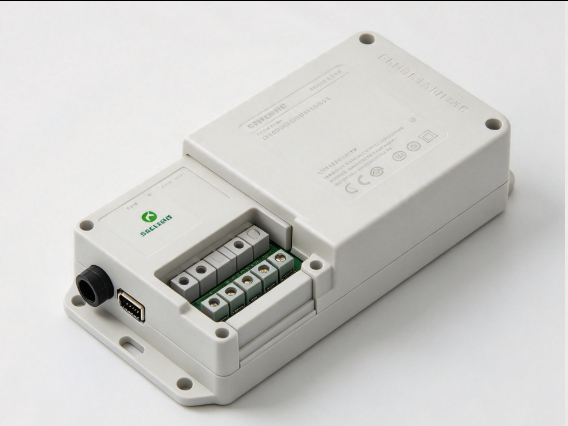
Injection molded electronic parts are precision plastic functional components specially manufactured for electronic equipment, circuit systems, and intelligent hardware through professional electronic-grade injection molding technology. As the basic supporting parts of the electronic manufacturing industry, they cover electronic component fixing parts, insulating protective parts, equipment structural shells, wiring auxiliary parts, and precision functional parts. With the advantages of high precision, good insulation, stable performance, light weight, and mass producibility, injection molded electronic parts are widely used in consumer electronics, industrial control electronics, communication equipment, new energy electronics, and intelligent sensing systems, and are key components to ensure the precise assembly, safe operation, and stable performance of electronic equipment.
Electronic-grade raw materials are the core guarantee of the high performance of injection molded electronic parts. Different from ordinary plastic products, injection molded electronic parts need to meet strict electronic industry safety standards, and all selected materials have excellent insulation, low water absorption, anti-aging, and anti-static properties. The mainstream materials include electronic-grade ABS, PC, PA66, PBT, and POM engineering plastics. Electronic-grade ABS materials have stable insulation performance, good molding precision, and low shrinkage, suitable for ordinary electronic structural parts and shell accessories; PC materials have high transparency, high strength, and flame retardant performance, widely used for electronic display windows and high-precision protective parts; PBT materials have low water absorption and high dimensional stability, which will not deform due to environmental humidity changes, suitable for precision electronic assembly parts; modified flame-retardant materials meet UL94 V0 flame retardant standard, which can effectively prevent electronic circuit fire hazards and improve equipment safety.
Precision injection molding process ensures the high dimensional accuracy and structural stability of electronic parts. Electronic parts are characterized by small size, complex structure, and high assembly precision requirements, so the production process has extremely high technical thresholds. The production adopts micron-level precision molds and full-automatic precision injection molding equipment, with precise control of injection temperature, pressure, speed, and cooling cycle parameters. The one-time integral molding technology realizes the integrated forming of micro-structures such as miniature fixing columns, precision clamping grooves, tiny wiring holes, and insulating partitions, with dimensional accuracy up to ±0.03mm, completely meeting the precise assembly matching requirements of chips, circuit boards, sensors, and other precision electronic components. The products have no burrs, no shrinkage depressions, and no structural deformation, with extremely high product consistency and stability.
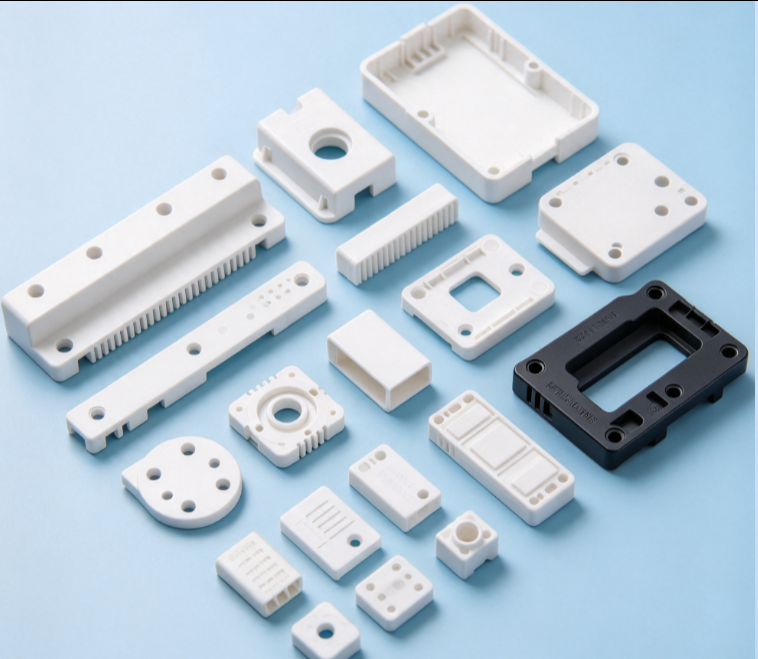
Functional classification and detailed application of injection molded electronic parts cover all links of electronic equipment manufacturing. The first category is electronic insulating parts, including insulating gaskets, insulating partitions, circuit board insulating brackets, and terminal insulating sleeves. These parts use high-insulation plastic materials to isolate live circuits and metal structural parts of electronic equipment, prevent short circuit and electric leakage, and ensure the safe operation of electronic systems. The second category is precision fixing and positioning parts, including component fixing brackets, circuit board positioning columns, and equipment assembly buckles, which play a role in fixing and limiting internal electronic components, avoiding component displacement and loose contact caused by equipment vibration, and improving the stability of electronic equipment operation.
The third category is electronic heat dissipation and ventilation parts, including heat dissipation brackets, ventilation baffles, and cooling guide grooves. Through professional structural design, these parts optimize the internal air circulation of electronic equipment, efficiently export the heat generated by circuit operation, prevent equipment overheating and crash, and improve the continuous working capacity of electronic equipment. The fourth category is wiring and protection auxiliary parts, including wiring grooves, cable fixing clamps, and interface protective sleeves, which standardize the internal wiring of electronic equipment, avoid cable confusion and signal interference, and protect equipment interfaces from dust, moisture, and collision damage. The fifth category is miniature electronic shell parts, including sensor small shells, connector housings, and module protective shells, providing independent protection for miniature precision electronic modules.
The performance advantages of injection molded electronic parts are highly adapted to the working characteristics of electronic equipment. First, the excellent electrical insulation performance effectively avoids electric leakage, short circuit, and electromagnetic conduction interference, ensuring the safety and anti-interference ability of precision electronic equipment. Second, the low water absorption and anti-aging performance enable the parts to maintain stable structural size and performance in long-term humid and temperature-changing environments, without deformation, aging, and failure. Third, the light weight and high toughness reduce the overall weight of electronic equipment, and have good vibration and impact resistance, suitable for portable electronic devices and mobile intelligent equipment. Fourth, the plastic material has good chemical stability, not easy to be corroded by dust, oil, and weak acid and alkali substances in the working environment, with long service life.
In terms of industry application and market value, injection molded electronic parts are the foundation of the rapid development of the modern electronic manufacturing industry. In the consumer electronics field, they are used for mobile phones, tablets, Bluetooth devices, and power supply equipment accessories; in the industrial electronics field, they support industrial controllers, precision detectors, and automation sensor equipment; in the communication electronics field, they are applied to signal base stations, communication terminals, and network equipment; in the new energy electronics field, they serve for energy storage equipment, charging modules, and power management systems. With the continuous miniaturization, precision, and intelligence of electronic equipment, the technical requirements for injection molded electronic parts are constantly improved. High-precision, flame-retardant, anti-static, and low-consumption injection molded electronic parts have become the mainstream of the industry, providing reliable structural support and safety guarantee for the upgrading and iteration of various electronic products.