Release Date: Sep 24, 2026
A plastic electronic enclosure is a professional plastic structural shell specially developed and produced for electronic components, circuit boards, and electronic equipment systems. It is a basic protective component integrating electronic equipment protection, structural fixing, insulation isolation, and appearance packaging. Made of high-quality engineering plastic materials and processed by precision injection molding technology, plastic electronic enclosures have the characteristics of excellent electrical insulation, light weight, anti-corrosion, anti-interference, low cost, and easy molding. They are widely used in consumer electronics, industrial control electronics, automotive electronics, communication electronics, and intelligent sensing equipment, and are the most widely used protective housing type in the electronic equipment manufacturing industry.
The core functional value of a plastic electronic enclosure is to provide all-round safety protection for internal electronic components. Electronic components such as circuit boards, chips, capacitors, and sensors are extremely sensitive to external environmental factors such as static electricity, dust, moisture, and physical collision. The plastic electronic enclosure forms a closed protective space for internal electronic equipment, effectively isolating external dust and debris to prevent circuit short circuit and component failure caused by dust accumulation. The dense plastic structure can block moisture and humid air from invading, avoid circuit board oxidation, rust, and short circuit failure in humid environments, and greatly improve the stability and service life of electronic equipment. In addition, the plastic material has good buffer performance, which can absorb and offset the vibration and impact generated during equipment transportation and use, preventing precision electronic components from being damaged by vibration.
Electrical insulation performance is the most critical technical advantage of plastic electronic enclosures. High-quality plastic electronic enclosures are made of insulating engineering plastics such as ABS, PC, and PA66, which have ultra-high insulation resistance and breakdown voltage resistance, and will not conduct electricity under normal working voltage. This excellent insulation performance can effectively isolate the internal live circuit from the external operating environment, prevent electric leakage accidents during equipment operation and manual operation, and ensure the safety of equipment and operators. At the same time, the insulating plastic structure can avoid electromagnetic conduction interference, reduce the mutual interference between internal electronic circuits and external electromagnetic signals, and improve the signal stability and working accuracy of precision electronic equipment such as sensors and communication modules.
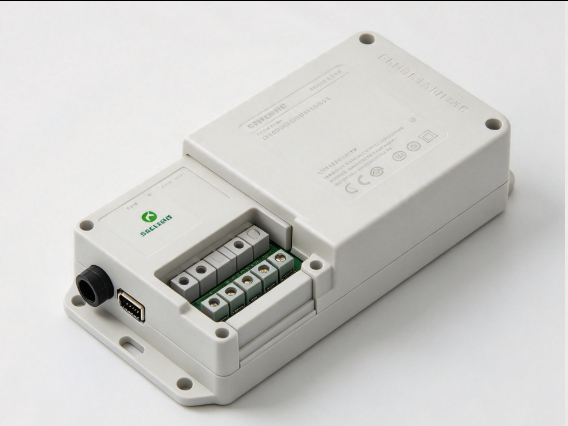
In terms of structural design, plastic electronic enclosures adopt scientific and humanized integrated structural design, which is highly compatible with electronic equipment assembly. Most products adopt a split upper and lower cover structure, which is convenient for equipment assembly, wiring, debugging, and later maintenance. The interior of the enclosure is preset with precision positioning columns, fixing holes, and limiting clamping grooves, which can precisely fix circuit boards, batteries, and electronic modules, avoiding component displacement and loose wiring caused by equipment vibration. According to the functional needs of electronic equipment, the enclosure can be designed with reserved holes for power interfaces, signal interfaces, switch buttons, and display screens, realizing the perfect matching of shell structure and equipment functional layout. Some high-end enclosures are also designed with heat dissipation holes, ventilation grooves, and waterproof sealing structures to solve the heat dissipation and waterproof problems of electronic equipment during operation.
Material performance upgrading ensures the adaptability of plastic electronic enclosures in different working environments. Conventional plastic electronic enclosures use standard ABS materials, which are suitable for indoor normal temperature and dry environments, with stable performance and low cost. For industrial high-temperature working environments, high-temperature resistant PC and PA materials are selected, which can maintain stable structural performance in the temperature range of -40℃ to 120℃, without deformation and aging. For flammable and explosive industrial scenarios, flame-retardant modified plastic materials are adopted, which can self-extinguish in case of open fire, effectively preventing fire accidents caused by electronic circuit short circuit. For outdoor electronic equipment, anti-ultraviolet and weather-resistant modified materials are used to resist long-term sun exposure and rain erosion, avoiding shell aging, fading, and brittleness.
The production process of plastic electronic enclosures is mature and precise, ensuring stable product quality and high consistency. The whole production process adopts precision mold injection molding, with high mold precision and stable molding parameters, which can ensure that the dimensional error of each shell is controlled within the micron level, and the product uniformity is extremely high. The injection molding process realizes one-time integral forming of the shell, with smooth surface, no burrs, no cracks, and compact structure, avoiding structural defects caused by secondary processing. After molding, the products are inspected by strict quality inspection procedures, including dimensional inspection, insulation performance test, pressure resistance test, and drop impact test, to ensure that each batch of products meets industrial electronic safety standards.
Plastic electronic enclosures have extremely high cost performance and market applicability. Compared with metal electronic enclosures, plastic enclosures have lower raw material cost and processing cost, lighter weight, and simpler transportation and installation, which can effectively reduce the overall manufacturing cost of electronic products. At the same time, the strong plasticity of plastic materials can meet the diverse appearance and structural design needs of electronic products, and can be matched with various surface processes to improve the appearance grade of products. In terms of application scope, it covers miniature electronic accessories, small household electronic equipment, industrial control instruments, automotive electronic modules, and communication terminal equipment. It is an essential basic part for the standardized production and safe operation of all kinds of electronic equipment, and plays an irreplaceable role in promoting the stable development of the electronic manufacturing industry.