Release Date: Oct 15, 2026
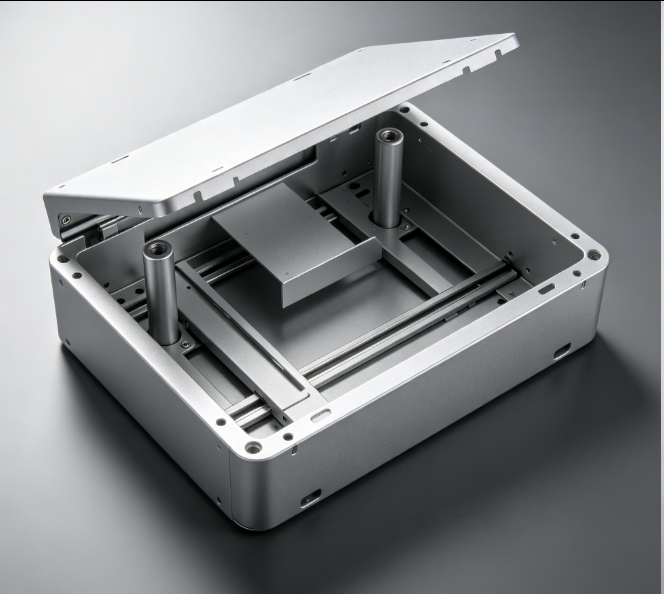
Aluminum Project Box is a multi-functional general-purpose aluminum housing specially used for electronic project development, circuit design testing, equipment prototype production, and small-scale electronic system integration. It is a necessary auxiliary tool for electronic engineers, scientific research personnel, and technical developers in project research and development, experimental testing, and prototype verification. Different from professional mass-produced equipment enclosures, aluminum project boxes focus on universality, operability, and flexibility, with standardized size design, reserved universal installation positions, and convenient disassembly and assembly characteristics, which can meet the housing protection needs of various electronic project development and experimental projects.
The design concept of aluminum project boxes is based on the practical needs of project research and development and experimental testing. In the process of electronic project development, engineers need to repeatedly test, modify, and debug circuit structures, and the traditional fixed enclosures are not convenient for disassembly and adjustment. Aluminum project boxes adopt a fully detachable assembly structure, with simple assembly steps and flexible disassembly, which is convenient for developers to open the box at any time to adjust internal circuits, replace components, and optimize structural layout. The internal space of the box is regular and flat, without redundant protruding structures, which can adapt to the installation of various sizes of circuit boards, power modules, sensor modules, and control panels, and has strong universality and compatibility.
In terms of performance, aluminum project boxes have stable and reliable basic protection capabilities. Made of high-quality lightweight aluminum alloy, the box has high structural strength, not easy to deform and damage in frequent handling, disassembly, and experimental operation, and can be reused for multiple project tests, greatly reducing the R&D cost of experimental projects. The metal aluminum shell has good heat dissipation performance, which can effectively dissipate the heat generated by internal experimental circuits and modules, avoid equipment overheating and burnout during long-term testing, and ensure the smooth progress of experimental data testing. At the same time, the box has basic electromagnetic shielding performance, which can reduce the interference of external environmental electromagnetic signals on experimental circuits, improve the accuracy of experimental test data, and ensure the authenticity and reliability of project R&D results.
The functional design of aluminum project boxes fully meets the diversified needs of project development. Most project boxes are preset with universal wiring holes, heat dissipation holes, and fixing screw holes, which are convenient for users to independently wire, install heat dissipation equipment, and fix circuit components according to project needs. The box body can be freely matched with accessories such as waterproof gaskets, dust-proof covers, rubber anti-slip feet, and portable handles, which can adapt to indoor laboratory experiments, outdoor field tests, and mobile debugging operations. The surface of the box is treated with anti-oxidation anodizing process, which is smooth and wear-resistant, not easy to rust and corrode, and can maintain a good state in long-term repeated use, with a long service life.
Aluminum project boxes are widely used in electronic engineering R&D, university teaching experiments, technical training, and small-batch prototype production. In enterprise R&D departments, they are used for prototype testing and functional verification of new electronic products, new control systems, and new energy modules. In university laboratories, they serve as experimental housings for electronic technology teaching, circuit design training, and student innovation projects. In technical training institutions, they are used for equipment protection in electronic maintenance and circuit debugging training. In small-batch customized production, they can be used as temporary and small-batch product housings to quickly verify product market effects. With the rapid development of electronic technology and the increasing number of innovative R&D projects, aluminum project boxes have become an essential basic equipment in the electronic R&D industry.