Release Date: Sep 19, 2026
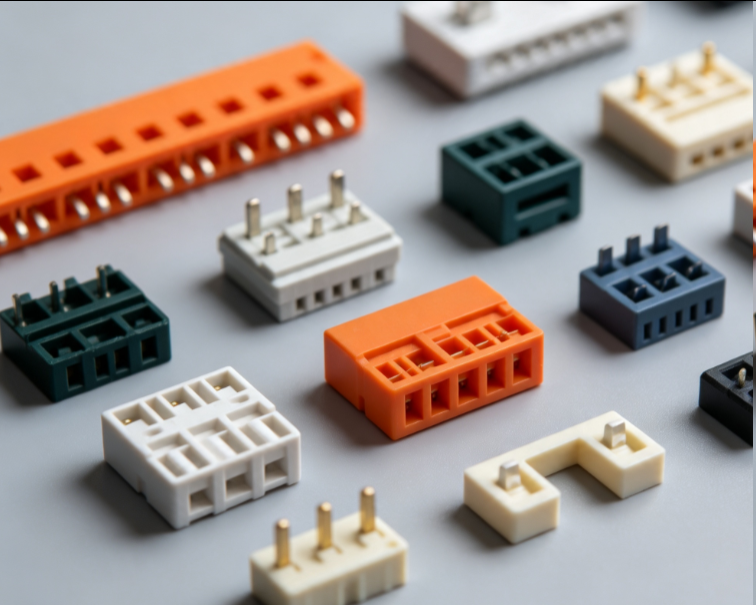
Plastic connector housing is a key structural and protective component of electronic and electrical connectors, serving as the outer shell carrier for internal conductive terminals, insulating parts, and locking structures of connectors. It is widely used in electronic communication, automotive electronics, industrial automation, household appliances, new energy equipment, and intelligent hardware fields. As an indispensable basic accessory of connection systems, plastic connector housing undertakes multiple core functions including electrical insulation, internal component protection, mechanical fixing, dustproof and waterproof sealing, and anti-interference shielding assistance, and its structural design, material performance, and processing accuracy directly determine the service stability, safety, and service life of the entire connector system.
The material selection of plastic connector housing is based on the comprehensive application environment and functional requirements, mainly including engineering plastics with excellent insulation, mechanical properties, and environmental adaptability. The most commonly used materials are PA66, PBT, ABS, PC, and LCP liquid crystal polymer. PA66 material has high mechanical strength, good toughness, wear resistance, and heat resistance, with excellent tensile and impact resistance, suitable for automotive and industrial high-load connector housings. PBT features fast molding speed, low water absorption, good dimensional stability, and outstanding electrical insulation, which is the mainstream material for ordinary electronic connector housings. ABS material balances rigidity, toughness, and molding processability, with smooth surface and low cost, widely used in household appliances and consumer electronic connector shells. PC material has ultra-high impact resistance, flame retardancy, and high and low temperature resistance, suitable for high-end electronic equipment connectors that require high safety. LCP liquid crystal polymer has ultra-high temperature resistance, low dielectric loss, and stable dimensional precision under high-frequency conditions, specially used in 5G communication and high-precision electronic connector housings.
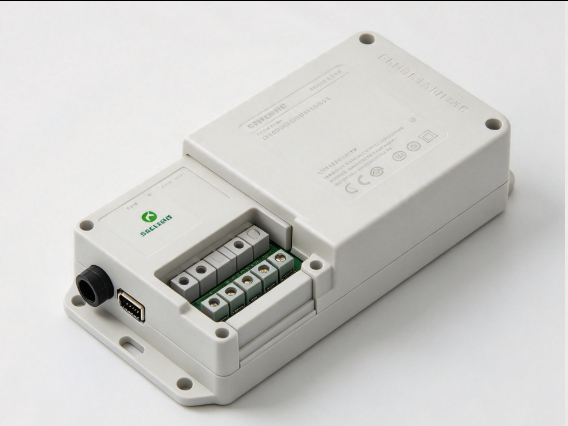
Structural design is the core competitiveness of high-quality plastic connector housing. Professional connector housing design needs to comprehensively consider assembly matching, mechanical locking, environmental protection level, and production manufacturability. The shell is usually designed with precise terminal positioning grooves, anti-loosening buckles, waterproof sealing grooves, and foolproof insertion structures. The terminal positioning structure ensures that the internal conductive terminals are accurately fixed without offset or loose contact, guaranteeing the stability of electrical signal transmission. The anti-loosening buckle design can effectively prevent the connector from falling off due to vibration, pulling, and other external forces during use, improving the connection reliability of equipment. The waterproof and dustproof structural groove can be matched with rubber sealing rings to realize IP54, IP65, IP67 and even higher-level protection, adapting to harsh working environments such as outdoor, industrial dust, and humid conditions. The foolproof insertion structure avoids wrong insertion and reverse insertion of the connector, preventing equipment circuit failure and component damage caused by misoperation.
In terms of processing technology, plastic connector housing is mainly produced by precision injection molding process. Due to the small size, complex structure, and high dimensional accuracy requirements of connector housings, high-precision multi-cavity molds are usually adopted for mass production. The mold is precisely processed by CNC milling, wire cutting, and mirror spark processing to ensure the consistency of product cavity size and surface finish. In the injection molding process, precise injection temperature, injection pressure, and cooling time control are adopted to eliminate product defects such as shrinkage, warpage, burrs, and bubbles, ensuring that each housing has consistent dimensional accuracy and structural stability. For connector housings used in high-end fields such as automotive electronics and aerospace, secondary processing technologies such as surface frosting, electroplating, and flame retardant modification are also carried out to improve product wear resistance, corrosion resistance, and flame retardant grade.
Plastic connector housing has irreplaceable advantages compared with metal connector housing. First, it has excellent electrical insulation performance, which can completely isolate conductive terminals, effectively prevent short circuits, electric leakage, and signal crosstalk, and improve the safety and stability of electrical equipment operation. Second, it is lightweight, which can reduce the overall weight of electronic equipment, especially suitable for portable electronic devices, new energy vehicle wiring harnesses, and aerospace equipment with strict weight control requirements. Third, plastic materials have good corrosion resistance, avoiding rust and oxidation problems of metal shells, and can adapt to humid, acidic, and alkaline harsh environments for long-term use. Fourth, the injection molding process can realize complex structural integral molding, with high production efficiency and low comprehensive cost, which is more suitable for large-scale industrial production than metal stamping and casting processes. Fifth, plastic shells support diversified color customization, which can realize functional color distinction of different connector interfaces, facilitating equipment installation, maintenance, and fault detection.
The application fields of plastic connector housing are extremely extensive and cover almost all electronic and electrical equipment. In the consumer electronics industry, it is used in mobile phones, computers, tablets, headphones, and charging equipment connectors, meeting the lightweight and miniaturization needs of consumer electronic products. In the automotive electronics field, it is applied to automobile wiring harness connectors, new energy vehicle battery connectors, vehicle-mounted navigation and sensor connectors, adapting to vehicle vibration, high temperature, and outdoor complex environment. In industrial automation, it is used in PLC equipment, sensor connectors, industrial control wiring terminals, and automation equipment connection components, ensuring stable signal transmission in industrial production environments. In the new energy field, it is widely used in photovoltaic power generation equipment, energy storage equipment, and charging pile connectors, relying on high flame retardancy and high temperature resistance to ensure the safe operation of new energy equipment. With the rapid development of 5G communication, intelligent manufacturing, and new energy industries, the demand for high-precision, high-reliability plastic connector housing is continuously increasing, and the products are developing towards miniaturization, high integration, high frequency resistance, and ultra-high protection level.